top of page


Cognitive Behavioural Therapy (CBT)
Cognitive Behavioural Therapy (CBT) is a structured form of psychotherapy that focuses on the connections between thoughts, emotions, and behaviours. It is a practical, goal‑focused approach that aims to help people identify and respond differently to unhelpful or unbalanced thinking patterns.
Core Principles
- Present-focused - Addressing current difficulties rather than only the past.
- Collaborative - Psychologist and client work together as a team.
- Active Participation - Engagement in sessions and skill practice.
- Structured - Clear format with regular progress reviews.
- Evidence-Informed - Supported by substantial research.
Common Techniques
- Cognitive Restructuring - Challenging unhelpful thoughts.
- Behavioural Activation - Encouraging rewarding activities.
- Mindfulness - Developing awareness to manage stress.
- Exposure - Safely reducing avoidance of fears.
- Problem-solving - Action plans for complex issues.
How CBT May Be Used
- Anxiety - Managing worry and threat-based thinking.
- Depression - Supporting engagement and identifying patterns.
- PTSD - Processing trauma-related responses.
- OCD - Addressing intrusive thoughts and behaviours.
- Attention/Impulse - Strategies for focus and regulation.
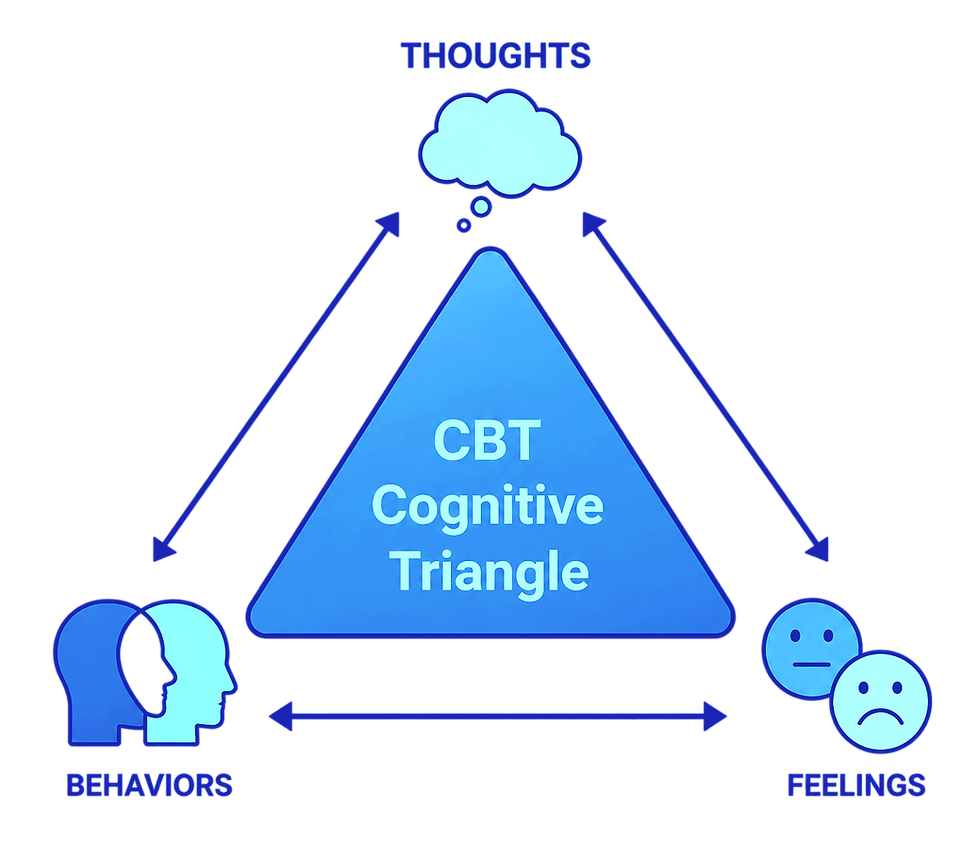
CBT is a flexible approach and may be adapted to suit different presentations. The suitability of CBT depends on individual circumstances and is typically discussed as part of an initial assessment.
bottom of page